



Part 3: The Heart's Quiet Struggles – Loneliness, Family Dynamics, and Attachment to Home
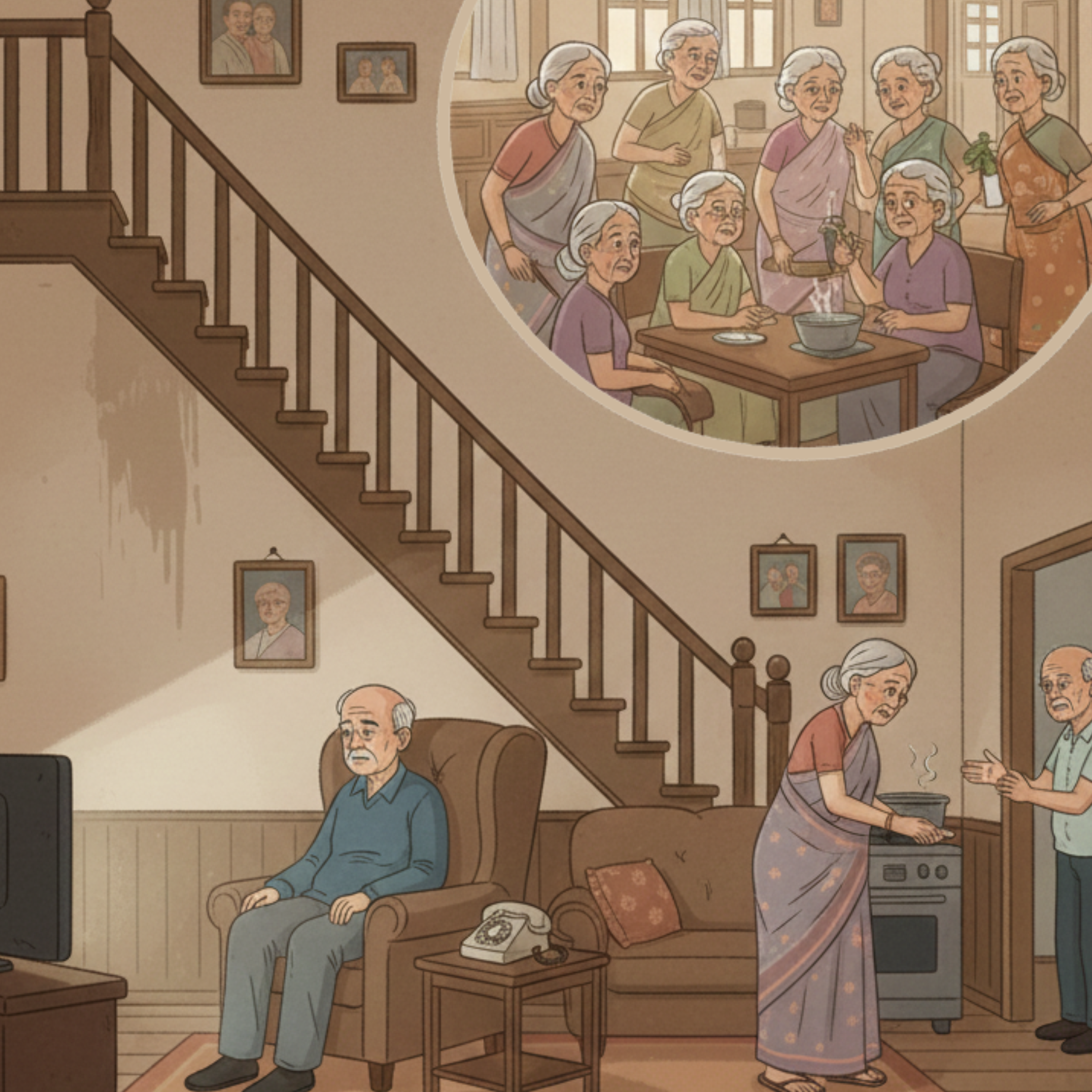
Prakash fills evenings with TV noise to combat silence, his attempts at outings yielding little connection. He assures his daughter he's "fine," but loneliness aches, linked in studies to cognitive decline and physical health risks like heart disease.
Family visits compound this: Sushila preps tirelessly for her son's family's Christmas visit, hiding her arthritis pain, only to collapse in exhaustion afterwards. Geriatric psychology notes that this overexertion stems from role expectations, leading to burnout and unspoken resentment.
At the root is home attachment: Kamala and Prakash cherish the memories of their bungalow, but face stairs and leaks as burdens. Emotional resistance to change often masks anxiety over losing identity, yet staying can isolate one amid growing challenges.
Woven through these is the shadow of dependency. To combat loneliness or host visits, seniors turn to neighbours for company or family for practical aid—borrowing a hand for setup or a chat to fill the void. Helpers may oblige initially, but fatigue sets in, leading to awkward dynamics where needs clash with boundaries. Seniors sense the shift—friends dodging invites, family visits tapering—fearing they're seen as burdensome. They'd pay for structured companionship or help, but relational ties complicate it, breeding mental trauma from rejection or guilt. Maintaining an "All is Well" image exhausts them further, hiding vulnerabilities to preserve pride, while the fragility of personal support leaves them exposed when it wanes.
Problems arise from a lack of social infrastructure; homes don't naturally provide companionship or event coordination. Professional facility-based care illustrates a path forward: integrated activities, peer interactions, and support for visits (such as guest preparation) nurture connections, while adaptable spaces preserve personal touches and offer reliable engagement without the emotional pitfalls of dependency.
Recognising needs for community programs and emotional support highlights why solitude isn't always serene.
Thoughts to consider:
1. Does loneliness creep in despite your efforts, especially when it means leaning on others who might pull back?
2. How do family interactions affect your energy, and what if they didn't require favours that strain bonds?
3. If a space blended memories with built-in companionship, free from the awkwardness of fragile personal help, would it feel like a gain or a loss?
In our final part, we'll synthesise these insights for holistic reflection.
No comments yet. Be the first to comment!