



Part 5: The Unseen Sacrifice – When Caregiving Steals the Spouse's Golden Years
In our ongoing exploration of the hidden costs of ageing at home, we turn to a deeply personal dynamic: the impact on a healthy spouse thrust into the role of primary caregiver. This part draws on real-life scenarios in which one partner's vulnerabilities reshape the other's life, highlighting how well-intentioned devotion can lead to quiet resentment, isolation, and the forfeiture of personal fulfillment.
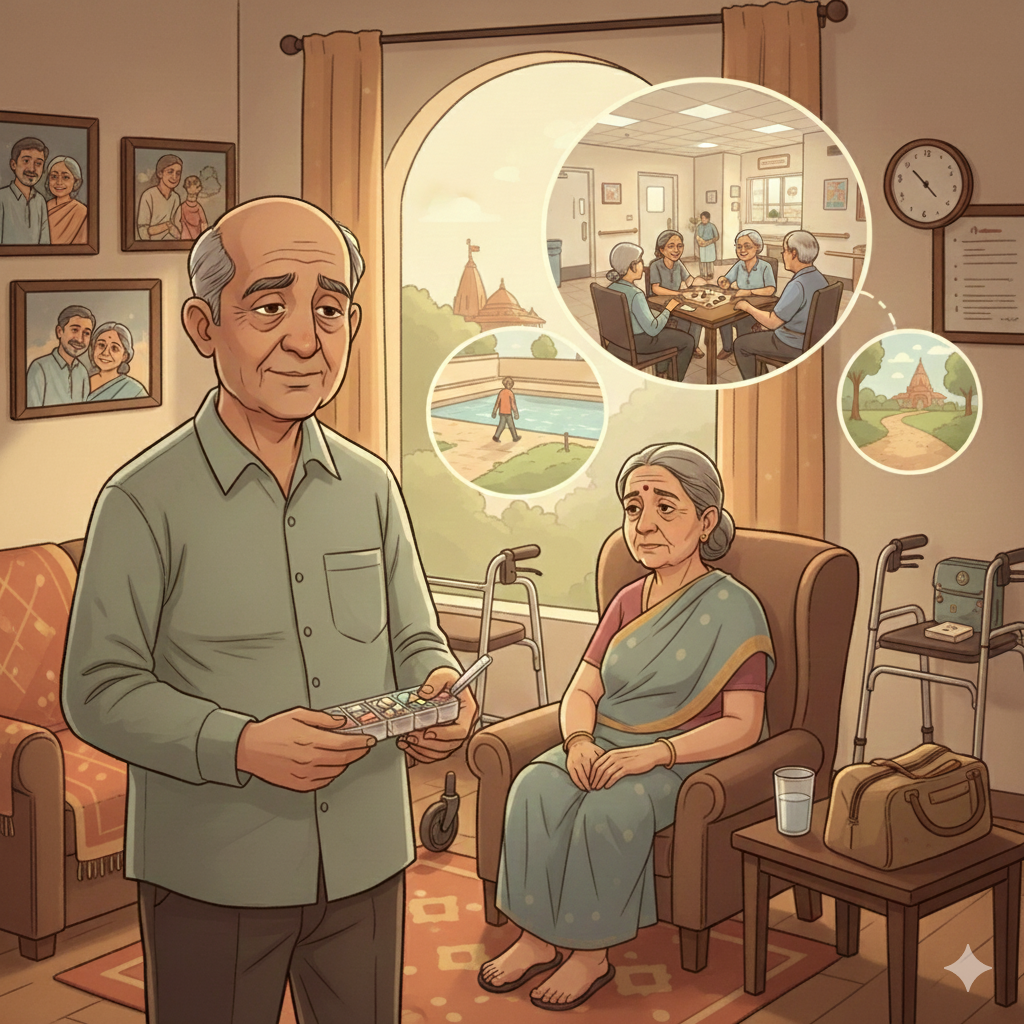
Vivek and Usha Kulkarni, a couple in their mid-seventies, are enjoying their independent home in Pune. With their son and daughter settled happily in the US, the Kulkarnis embody the ideal of mutual support in later life. Usha, however, grapples with arthritis, obesity, and early-stage Alzheimer's, conditions that render her increasingly dependent on Vivek for daily routines, maintaining hygiene, medication reminders, and mobility assistance. Vivek, fit and vibrant, shoulders this responsibility, arranging a caregiver to help. Yet, the management falls squarely on him: vetting reliability, coordinating schedules, and maintaining constant vigilance against lapses. "What if the caregiver can't handle an episode?" he worries, his mind perpetually occupied, even during moments of respite.
Vivek's post-retirement dreams—reconnecting with old friends over morning walks, swimming laps at the local pool, or embarking on a short pilgrimage—have faded into the background. He can't leave Usha unattended, and outings together prove challenging due to her limitations. Social invitations dwindle as friends sense his unavailability, leaving Vivek isolated in a caregiving cycle that demands emotional and physical energy he never anticipated. Usha, too, feels the strain; her awareness of Vivek's sacrifices breeds guilt, amplifying her own frustrations with her declining independence. Their children, viewing from afar, take pride in their parents' "teamwork," unaware of the exhaustion brewing beneath the surface—a facade of "All is Well" that both maintain to avoid burdening the family.
From a geriatric psychology perspective, this scenario exemplifies "caregiver burnout," a well-documented syndrome where the healthy spouse experiences chronic stress, leading to symptoms like fatigue, irritability, and even depression. The brain's constant state of hypervigilance—scanning for Usha's needs and anticipating emergencies can impair cognitive function and weaken immunity. Vivek's loss of hobbies and social ties compounds this, fostering a sense of identity erosion.
At its core, the problem stems from the absence of structured support in home settings. Ageing at home assumes that one partner's health won't dominate the other's life, but chronic conditions like Alzheimer's introduce unpredictability that no amount of love can fully mitigate. The hidden cost here is profound: the healthy spouse forfeits the opportunity for a self-directed life, trading golden years for a passive role defined by duty. Dependency extends beyond Usha's needs; Vivek relies on the caregiver's consistency, yet the arrangement's fragility—illness, turnover, or inadequacy—keeps him tethered, mentally exhausted from contingency planning. This isn't just about time; it's about the emotional trauma of watching dreams slip away, all while projecting strength to protect loved ones from worry.
A brighter path emerges in facility-based professional care, where specialized environments can transform this dynamic. Imagine Usha in a setting with trained staff offering round-the-clock monitoring for her conditions, cognitive therapies for Alzheimer's, and adaptive programs for arthritis and mobility. This frees Vivek from the grind of management, allowing him to visit as a loving partner rather than a constant guardian. He could reclaim his hobbies—swimming or traveling —knowing Usha is secure, while spending quality time with her in shared activities, like garden walks or group events. Such infrastructures and couple-friendly accommodations preserve the marital bond without sacrificing individual vitality, turning caregiving from a burden into a choice.
These insights underscore the need for awareness: Chronic dependency doesn't just affect the vulnerable partner; it reshapes the caregiver's world, often at the expense of their own health and happiness. By recognizing these hidden sacrifices, families can explore options that honor both partners' needs.
Thoughts to consider:
1. If one partner's health demands constant oversight, how does it reshape the other's sense of freedom and fulfillment, especially when informal help proves fragile?
2. What if professional support allowed caregiving to be a shared, sustainable effort—how might that restore balance and joy in your relationship?
3. In reflecting on your golden years, does the fear of losing personal pursuits to duty make you reconsider the infrastructure needed for mutual thriving, free from the exhaustion of unyielding vigilance?
As we conclude this series on the hidden costs of ageing at home, it's worth pausing to trace the fault lines that run beneath the surface of what many view as the gold standard of senior living: the familiar family home. Through stories like Meena's midnight anxieties, Vijay's relentless chores, Prakash's echoing solitude, and Vivek's quiet sacrifices as a
caregiver, we've peeled back the layers of vulnerability that accumulate without structured support. These aren't isolated incidents but interconnected cracks—emotional isolation breeding mental fatigue, physical dependencies straining relationships, and the illusion of independence masking a fragile reliance on informal networks that can fray or fail over time. These fault lines widen with age, turning what begins as manageable into a web of chronic stress, burnout, and diminished quality of life for seniors and their loved ones alike.
Home, while rich in memories, often lacks the built-in infrastructure to adapt to evolving needs—24/7 medical readiness, seamless daily assistance, vibrant social ecosystems, and professional caregiving that lifts burdens without eroding dignity. This gap isn't a failure of will or love; it's a structural reality in an era where longevity outpaces traditional setups, leaving seniors to navigate uncertainties alone or through patchwork solutions that exhaust everyone involved.
What if rethinking "home" isn't about loss, but about gaining environments engineered for thriving? Professionally managed senior care facilities offer a bridge, blending personalized independence with reliable support, transforming hidden costs into opportunities for renewed vitality.
Your circumstances are unique—perhaps it's time to explore options that honor the past while securing a more resilient future. Thank you for joining this journey; may it spark conversations that lead to empowered choices.
Leave a Comment
Comments
Sai vissa
22 Nov 2025, 11:59 AMPart 1 to Part 5, all well written.