
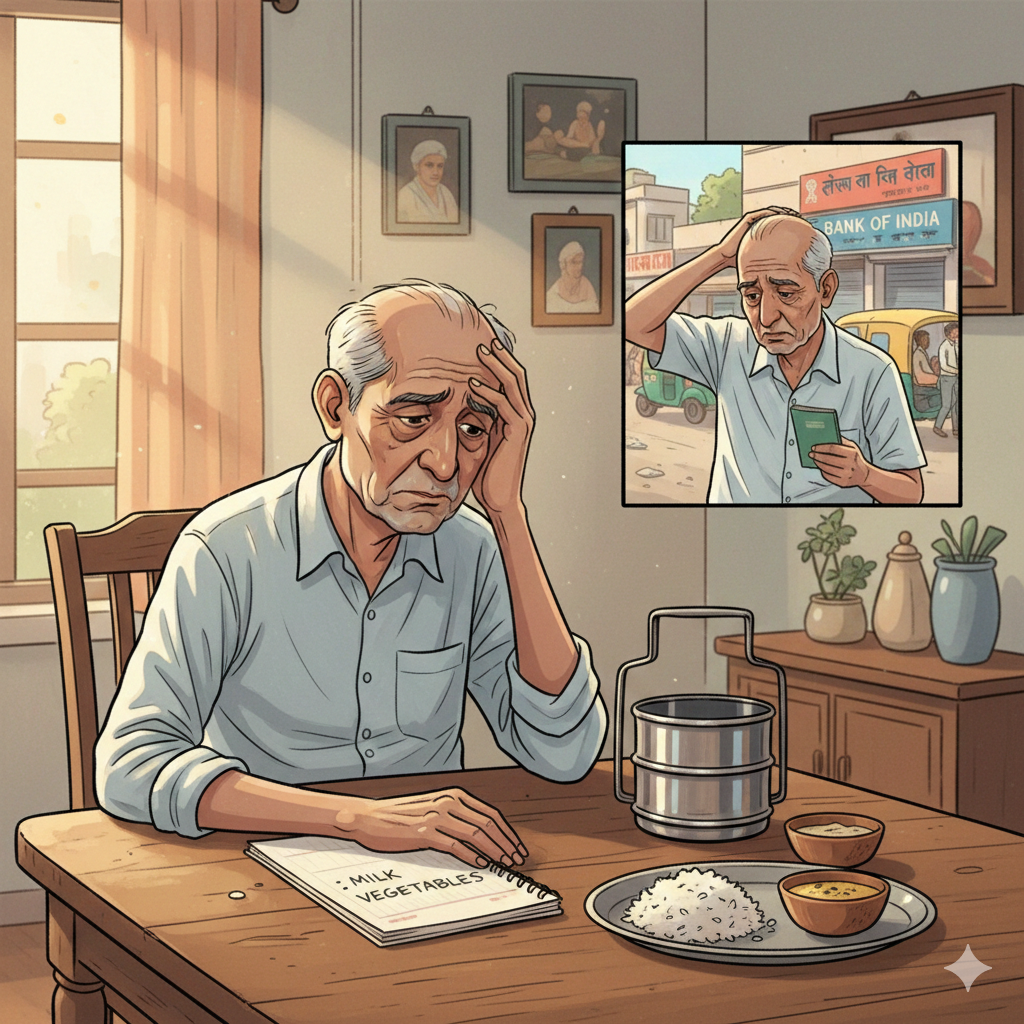



Part 2: The Daily Grind – Unseen Efforts in Chores, Errands, and Home Upkeep
Vijay's morning notepad lists milk, vegetables, and bills—tasks that, at 78 and diabetic, exhaust him. When his cook skips a day, he improvises a meal and later confides in a neighbour about the strain he hides from his daughter abroad.
In geriatric terms, this cognitive overload from routines drains mental energy, contributing to fatigue and reduced well-being. Similarly, Rajat's bank errand leaves him feeling dizzy and frustrated, as errands often demand physical exertion and decision-making that can amplify stress.
Home maintenance adds layers: Nalini's broken AC and leaking pipe turn into a week of discomfort and helplessness, heightening anxiety over reliability and costs. Psychology shows these burdens foster a sense of loss of control, linking to depression when reliance on others breeds guilt.
Beyond the effort, a hidden cost is the dependency it fosters. Seniors often rely on family, neighbours, or friends for tasks such as rides to the market or assistance with repairs. Initially, this is appreciated, but repeated requests can wear on helpers, leading to fatigue and blurred boundaries. The senior perceives subtle avoidance—calls not returned promptly, visits shortened—as stemming from a fear of more requests. They're willing to compensate, but the personal connection makes it awkward, risking resentment or strained relationships. This assumption of endless availability leaves seniors vulnerable, their "All is Well" facade hiding exhaustion from overcompensating to avoid appearing needy.
The core issue? Homes require constant management without built-in support, turning retirement into labour. Facility-based professional environments address this by offering services such as prepared meals, coordinated errands, and dedicated maintenance teams—freeing up energy for enjoyment while providing infrastructure for hassle-free living, without the emotional weight of personal dependencies.
Awareness of needs, such as on-demand assistance and preventive maintenance, can reveal how these hidden efforts erode joy.
Thoughts to consider:
1. Do daily tasks leave you more tired than fulfilled, especially when they pull in others for help?
2. Imagine if chores were handled without creating burdens—how would that reshape your days and relationships?
3. What infrastructure could make your home feel supportive rather than a source of fragile favours?
Next, Part 3 examines the social and emotional hidden costs.
No comments yet. Be the first to comment!